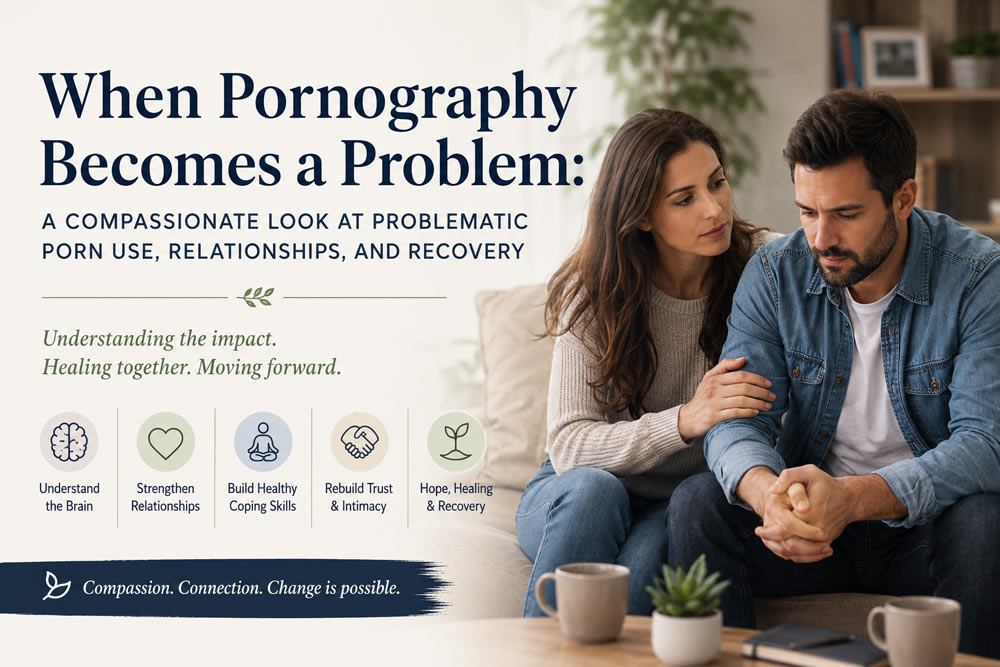
By Dr. Kara Catrelle, PhD, LCSW, CST
Few topics generate as much confusion, shame, defensiveness, and conflict in relationships as pornography.
For some individuals and couples, pornography is an occasional source of entertainment, fantasy, education, or erotic exploration. For others, it becomes a source of secrecy, loneliness, conflict, emotional disconnection, and distress.
The reality is that pornography itself is not inherently good or bad. The more important question is this:
- What role is pornography playing in a person’s life and relationships?
As a therapist and sex therapist, I have found that the most productive conversations move away from moral judgments and toward curiosity. Rather than asking whether pornography is right or wrong, we can ask:
- Is it enhancing or diminishing intimacy?
- Is it creating connection or isolation?
- Is it a conscious choice or a compulsive behavior?
- Is it aligned with a person’s values and relationship agreements?
When pornography begins interfering with emotional connection, sexual satisfaction, work, self-esteem, or daily functioning, it may be time to take a closer look.
Understanding Problematic Porn Use
Not everyone who watches pornography has a problem.
Problematic porn use is generally characterized by a loss of control, persistent use despite negative consequences, and increasing difficulty reducing or stopping use despite repeated attempts.
Individuals may find themselves:
- Spending more time viewing pornography than intended
- Neglecting responsibilities or relationships
- Escalating toward more novel or extreme content
- Feeling unable to stop despite a desire to do so
- Using pornography primarily to cope with stress, anxiety, loneliness, depression, boredom, or emotional pain
- Experiencing shame, secrecy, or guilt surrounding use
The issue is often less about the content itself and more about the function it serves.
The Neuroscience of Pornography
Pornography activates the brain’s reward system, particularly pathways involving dopamine.
Dopamine is often misunderstood as the “pleasure chemical.” In reality, dopamine is more closely related to motivation, anticipation, novelty, and reward-seeking behavior.
The internet provides an almost unlimited supply of novelty. With a few clicks, viewers can access endless new images, scenarios, and experiences.
The brain naturally pays attention to novelty. This can create a cycle in which individuals continually seek new stimulation, not necessarily because previous material is no longer pleasurable, but because the brain has become conditioned to pursue novelty itself.
For some individuals, this process can contribute to:
- Increased time spent viewing pornography
- Difficulty becoming aroused without specific stimuli
- Reduced interest in partnered sexuality
- Escalation toward increasingly novel content
- Difficulty regulating urges during times of stress
It is important to note that not everyone who consumes pornography experiences these effects. Individual vulnerability, attachment history, mental health, relationship satisfaction, and coping skills all play a role.
Pornography and Attachment
One of the most overlooked aspects of problematic pornography use is attachment.
Many people are surprised to discover that pornography is not always about sex.
Sometimes it is about:
- Stress relief
- Escaping emotional pain
- Avoiding vulnerability
- Managing loneliness
- Regulating anxiety
- Creating a sense of comfort or predictability
When pornography becomes someone’s primary coping strategy, the behavior may function similarly to other forms of emotional avoidance.
The question becomes:
What feelings are being managed through pornography?
Often the answer is far more important than the pornography itself.
The Impact on Relationships
Not all couples view pornography the same way.
- Some couples welcome it.
- Some are neutral.
- Others experience significant distress.
Conflict often emerges when partners have different beliefs, expectations, or agreements regarding pornography use.
Common relationship concerns include:
- Secrecy
- Broken trust
- Feelings of betrayal
- Reduced sexual desire within the relationship
- Unrealistic expectations
- Emotional withdrawal
- Comparisons to performers
- Mismatched values
It is important to recognize that the pain experienced by a partner is real, regardless of whether pornography itself is viewed as inherently harmful.
Likewise, the individual using pornography is often struggling with shame, confusion, defensiveness, or feelings of inadequacy.
Healing requires understanding both experiences.
Moving Beyond Blame
One of the biggest mistakes couples make is turning pornography into a battle between “the offender” and “the victim.”
While accountability matters, sustainable change rarely grows from shame.
Instead, couples benefit from exploring:
- What needs are going unmet?
- What emotions are difficult to express directly?
- What role has pornography come to play?
- What agreements need to be clarified?
- How can trust be rebuilt?
The goal is not simply to eliminate a behavior.
The goal is to strengthen connection.
Steps Toward Healing
1. Develop Awareness
Track when urges occur.
Ask yourself:
- What happened before the urge?
- What am I feeling right now?
- What need am I attempting to meet?
Patterns often emerge quickly.
2. Build Emotional Regulation Skills
Many individuals discover that pornography has become a primary strategy for managing difficult emotions.
Alternative tools may include:
- Exercise
- Meditation
- Journaling
- Therapy
- Social connection
- Creative expression
- Mindfulness practices
3. Rebuild Intimacy
Recovery is not simply about reducing pornography.
It is also about increasing connection.
Couples often benefit from:
- Date nights
- Eye gazing
- Affection without expectations
- Honest conversations
- Shared experiences
- Exploring new forms of intimacy
4. Create Clear Agreements
Healthy relationships thrive on clarity.
Couples should openly discuss:
- What pornography means to each partner
- Individual boundaries
- Expectations
- Concerns
- Shared values
Assumptions often create more damage than differences.
5. Seek Professional Support
If pornography use is creating significant distress, working with a qualified therapist can help uncover underlying issues and develop healthier coping strategies.
Therapy can provide a safe space to address shame, attachment wounds, relationship conflict, anxiety, trauma, and compulsive behaviors.
A Compassionate Perspective
Most people struggling with problematic pornography use are not broken, immoral, or hopeless.
They are human.
Like many behaviors that become problematic, pornography often begins as an attempt to meet a legitimate need—for comfort, escape, pleasure, relief, connection, or regulation.
Real change happens when we move beyond judgment and begin asking deeper questions:
- What am I seeking?
- What am I avoiding?
- What do I truly need?
When individuals and couples approach these questions with honesty and compassion, healing becomes possible.
The goal is not perfection.
The goal is greater awareness, deeper intimacy, and a relationship with sexuality that aligns with one’s values, needs, and authentic self.